



Anyone who has seen a butterfly flit through a garden has probably never imagined it might be able to change the fate of the world. But in science and philosophy, the "butterfly effect" is more than just a poetic phrase—it’s a mind-bending explanation of how small, almost invisible actions can unleash unstoppable consequences.
This concept, rooted in chaos theory and historical causality, invites us to question just how significant the tiniest interactions in history might be.
THE ORIGINS OF CHAOS THEORY AND THE BUTTERFLY
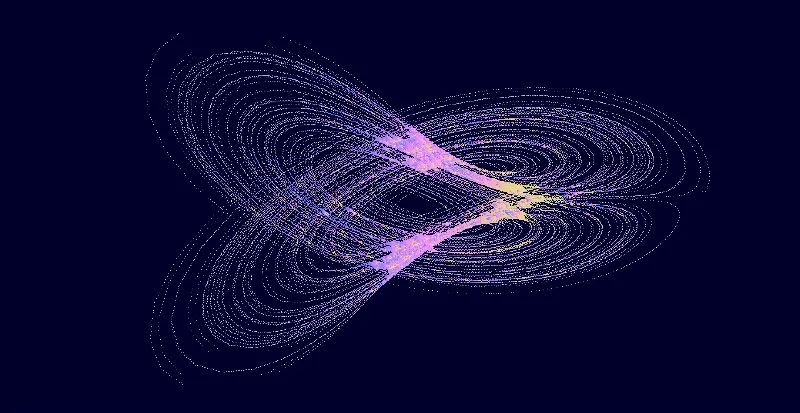
The butterfly effect comes from the study of chaos theory—an area of science that deals with complex systems whose behavior is highly sensitive to tiny changes. The term itself was coined by meteorologist Edward Lorenz in the 1960s. While running weather simulations, Lorenz discovered that rounding off a decimal point in his data—just a minuscule change—resulted in dramatically different weather predictions.
This led him to ask a legendary question: "Does the flap of a butterfly's wings in Brazil set off a tornado in Texas?"
- Stable Systems: Small actions cause small, predictable reactions.
- Chaotic Systems: Insignificant events, like a rounding error or a wing flap, can cascade and alter the future in unpredictable ways.
Of course, not every butterfly brings on a hurricane, but Lorenz’s work sparked a revolution in how we understand cause and effect.
FROM SCIENCE TO PHILOSOPHY: THE RIPPLE THROUGH TIME
Philosophers have long debated the nature of causality, but the butterfly effect added a new dimension. If a single choice can make massive waves through time, how do we trace the true causes of history?
Some philosophers compare this to throwing a pebble in a pond:
- Initial Impact: The pebble hits the water.
- Expansion: Ripples fan out, intersect, and multiply.
- Assimilation: Eventually, the ripples become indistinguishable from the surface itself.
This prompts a fascinating question: How many monumental events throughout history have hinged on everyday accidents? Are we living in a world shaped not by grand designs but by thousands of unnoticed moments and near-misses?
TALES OF THE UNEXPECTED: HIDDEN TURNING POINTS IN HISTORY
Our world is full of compelling stories where tiny, easily overlooked incidents changed everything:
- The Assassination of Archduke Franz Ferdinand: In 1914, Gavrilo Princip was ready to admit defeat after a failed attempt. Hungry and disheartened, he stopped at a café. Unaware of his presence, the Archduke’s driver took a wrong turn and stalled the car right in front of the café. This chance encounter triggered World War I.
- The Discovery of Penicillin: In 1928, Alexander Fleming noticed that mold had contaminated a petri dish. Instead of tossing it, he observed that the mold killed the surrounding bacteria. Had he been more meticulous with his cleaning, the medical revolution of antibiotics might never have happened.
PATTERNS IN EVERYDAY LIFE: THE BUTTERFLY IN YOUR OWN STORY
Beyond grand historical events, the butterfly effect plays out in our personal lives. Imagine missing your regular train due to a misplaced set of keys, only to meet someone on the next train who becomes your spouse or business partner.
This isn’t about magical thinking or fate—it’s the mathematics of complex systems. Life is full of infinite, interacting variables. Historical research has shown that individual choices by unknown figures have led to:
- The rise and fall of kingdoms.
- The invention of life-changing technologies.
- The blossoming of global artistic movements.
The next time a plan takes an unexpected turn, consider what ripples you might be setting in motion.

WHY THE BUTTERFLY EFFECT MATTERS TODAY
Understanding the butterfly effect does more than fuel entertaining "what-ifs." It is a reminder of the creative, unpredictable energy at the heart of science and history. In a world obsessed with control, chaos theory highlights the power and responsibility inherent in ordinary moments.
It also has vital practical applications in:
- Meteorology: Helping us understand the limits of weather forecasting.
- Economics: Predicting how small market shifts can lead to global trends.
- Resilience: Teaching us humility when things don’t go as planned.
For those fascinated by the mysteries of the world, the butterfly effect is a call to stay curious and attentive. Each decision we make, no matter how minor, could help shape a future we can hardly imagine. The subtle, almost invisible moments of today are the hidden architects of tomorrow’s history.