


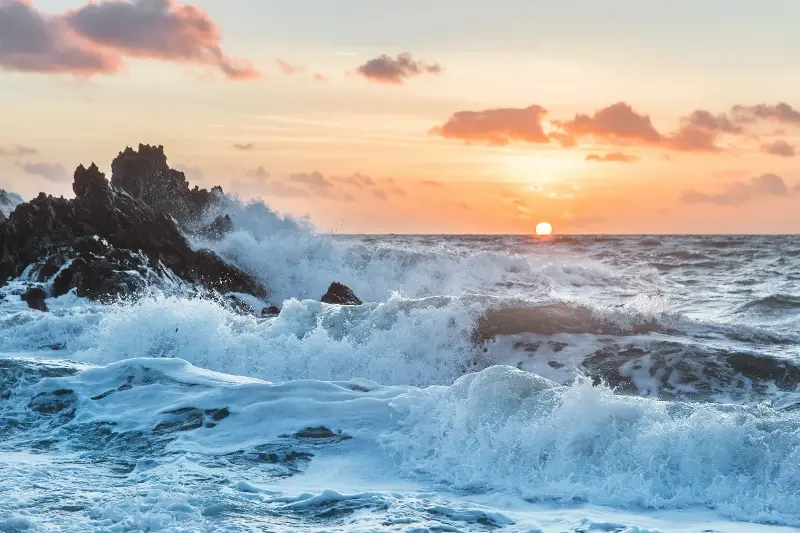
From a gentle ripple trailing along a sandy shoreline to the towering walls of water seen in epic surfing competitions, ocean waves capture our imagination like few other natural phenomena. Their visual beauty is unmistakable, but beneath every crest and trough lies a sophisticated science.
This kinetic journey stretches from a faint breath of wind to the harnessing of awe-inspiring global energy. By understanding the physics that brings these aquatic giants to life, we can appreciate the intricate mechanisms that keep our blue planet in constant motion.
The Birth of a Wave: Where Wind and Water Meet
Waves begin their lifecycle in the most unassuming of ways, starting precisely at the interface where atmospheric wind first brushes the ocean's surface.
- Capillary waves: As air rushes over open water, minute pressure differences and friction cause tiny disturbances. These micro-ripples, often just a few millimeters high, are known scientifically as capillary waves.
- Surface grip: These initial ripples provide a rougher "grip" for the wind, allowing subsequent kinetic energy to transfer to the water much more efficiently.
- Gravity waves: As the wind continues to blow, these ripples combine and grow into larger, more organized shapes called gravity waves.
The entire process relies on energy transfer. The stronger the wind blows, the longer it sustains its speed, and the greater the expanse of open water it travels across—a distance known as the fetch—the larger and more powerful the resulting waves become.
The Science of Swell: Energy on the Move
Once set in motion, ocean waves can travel astonishing distances across the globe with minimal loss of energy. A key to this efficiency is a fundamental rule of fluid dynamics: the energy moves through the water, while the water molecules themselves stay mostly in place.
Picture tossing a pebble into a still pond; you see a series of rings radiating outward, yet the water itself isn't traveling to the edge. Each individual water molecule moves in a small, tight, circular orbit—rising, moving forward slightly, dropping, and then rolling backward.
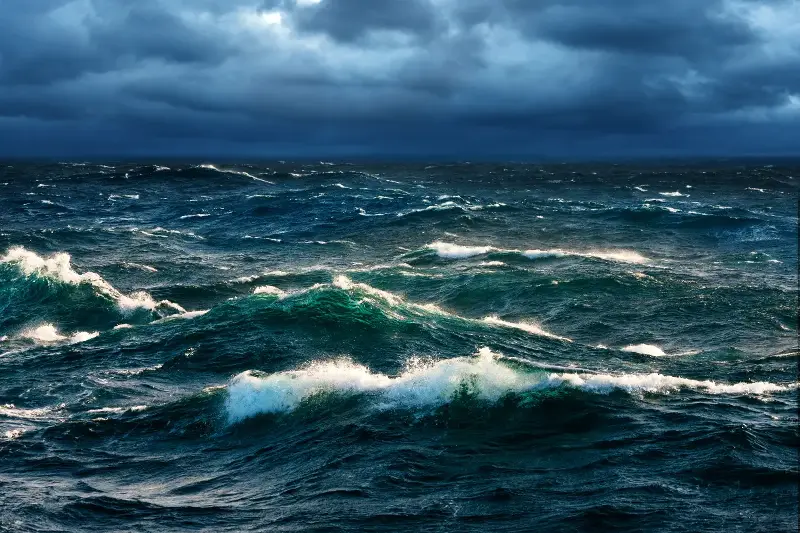
In the open ocean, this orbital motion is scaled up massively. The result is a deep-water wave, where the underwater energy loop does not reach deep enough to touch the seabed. Here, you find classic rolling swells—smooth, rhythmic undulations carrying energy across entire ocean basins for thousands of kilometers.
Coastal Geometry and the Anatomy of a Breaker
No two waves are entirely alike when they finally reach land, thanks to a constellation of local environmental factors. While wind speed, duration, and fetch determine the initial wave height and length, coastal geography dictates the dramatic finale.
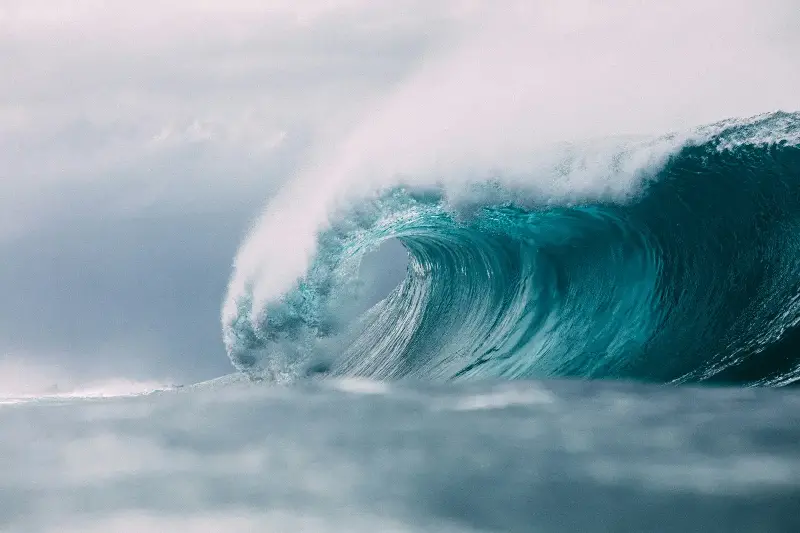
As a deep-water swell approaches a coastline, the water grows shallower, and the lower part of the wave begins to feel the ocean floor. Friction with the seabed slows the bottom of the wave down, while the top crest keeps moving forward at full speed. This speed disparity causes the wave to compress, stand up much higher, and eventually become unstable.
Ultimately, the crest topples forward, creating the familiar sight and sound of crashing surf. This exact transition explains why some beaches feature mellow rollers, while others are famous for monstrous, curling breakers.
Nature’s Expressway: Harnessing Clean Wave Energy
Hidden within the fluid dance of ocean swells is an immense reservoir of power. Oceanographers estimate that the kinetic energy carried by global waves amounts to several terawatts—theoretically enough to supply the world’s electricity needs many times over. This energy is a direct function of both wave height and the wave period (the time it takes for two consecutive crests to pass a fixed point).
Engineers are now successfully tapping into this predictable resource using advanced wave energy converters and floating wave farms. These innovative technologies capture the mechanical up-and-down motion of the swells to spin internal turbines or drive hydraulic pistons, seamlessly transforming restless ocean energy into clean, renewable electricity for coastal communities.
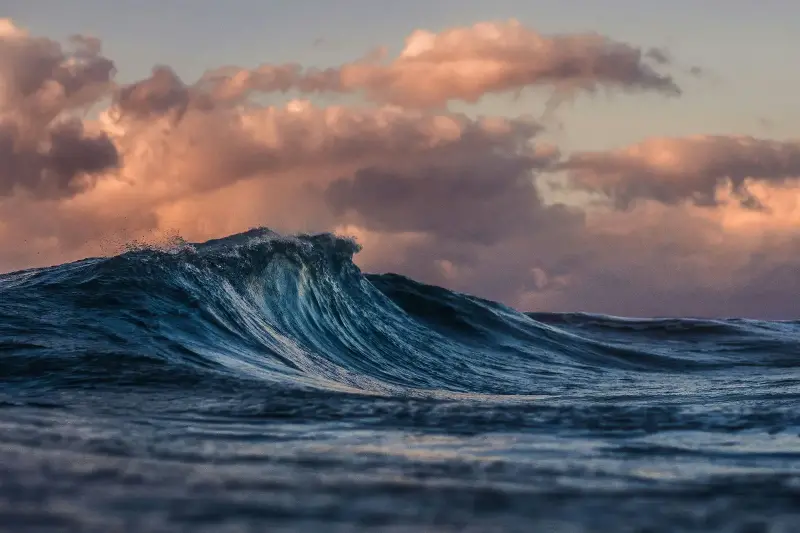
Colliding Swells and the Mystery of Rogue Giants
Wave dynamics extend far beyond predictable, rhythmic patterns. Often, waves traveling from entirely different global weather systems meet in the open ocean, causing their energies to combine through a phenomenon called interference.
- Constructive interference: Most of the time, crossing swells simply create a bumpy, disorganized surface texture known as chop.
- Rogue waves: Every so often, a rare and perfect alignment occurs where multiple wave crests overlap at the exact same place and time. This triggers a sudden spike in energy, producing a rogue wave.
These solitary, massive walls of water can suddenly reach heights of over 20 meters. Once dismissed as maritime myths, these giants are now actively tracked by scientists using satellite radar and high-tech buoy networks, deepening our profound respect for the ocean's dynamic and powerful character.