



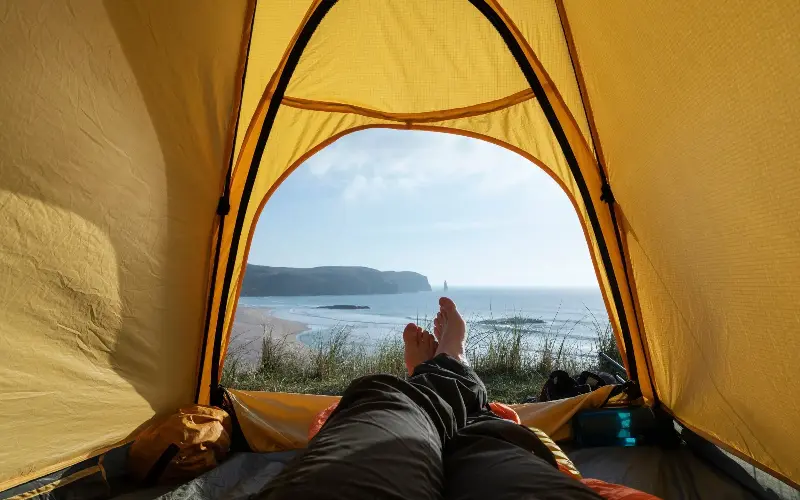
The stage is set for a rather spectacular British summer. A winter of relentless downpours followed by weeks of non-stop sunshine has brought banks of flowers to the roadsides and a visible release to people’s shoulders. Meanwhile, with houses sweltering, sleeping outside has never sounded better.
And that works out well, as 19 per cent of people are opting for domestic holidays rather than overseas ones this year, according to recent YouGov research. If there was ever a year to holiday under canvas, this is it.
But, if you’re new to camping, there are myriad mistakes to make – that bucolic dream can quickly turn into a living nightmare. Rob Ganley of the Camping and Caravanning Club advises a gentle introduction. “Start with a single overnight or weekend stay rather than a longer holiday,” he suggests. “That way it’s easy to nip home if you’ve forgotten anything essential.”
There are plenty of other dos and don’ts to consider too. Below, we set out ten ways to ensure a first-time camping trip is remembered for all the right reasons.
1. Do pick a site carefully…
… if you haven’t already. The particularly cautious should stay within a couple of hours of home, so it’s easy to flee the scene if things go wrong. “Beginners usually have a better experience on a campsite where knowledgeable staff are on hand in case you get really stuck – such as a Club Site,” says Ganley.
Other things worth considering: ease of travel to shops and attractions; whether you need bells and whistles such as playgrounds and paddling pools; and whether the site has a quiet area (not great if you plan to be the life and soul but essential if you desperately need sleep). Ganley also advises double-checking whether dogs are allowed, if you’re planning on bringing your pooch.
If you’re nervous about eschewing home comforts (sharing loos; cooking outdoors; washing up in ice-cold water), West Sussex’s Concierge Camping has pitches with “day cabins” complete with private shower rooms, dishwashers and fridge freezers.
2. Do check everything before you go
This is the classic rookie mistake and, as someone not prone to forward-planning, I’ve fallen foul of it a few times. It pays to have a dry run in the garden (if you have one, or on the living room floor if you don’t) to make sure you have all the tent pegs and other paraphernalia.
Add this to the list: “After all the recent hot weather, the ground is especially hard this summer, so if you can get your hands on one, I recommend bringing a good mallet for knocking in tent pegs,” says James Warner-Smith of Hipcamp.
3. Do consult the weather forecast
It affects everything from packing to pitching. You’ll need a shady spot if it’s going to be hot and a sheltered one if it’s windy. But Ganley also points out that you should face the narrowest end of the tent towards prevailing wind, pack waterproof bags to store damp equipment and open air vents in hot weather to maximise airflow.
4. Don’t go all Gordon Ramsay
My husband can erect a tent in five seconds flat (nearly) but camp fires are his kryptonite. If you want to be safe rather than starving, pack a camping stove. “Cooking over an open fire is enjoyable but not particularly easy for beginners,” says Ganley. “It takes time to build and manage the fire, cooking temperatures are difficult to control, and many campsites either restrict or completely prohibit open fires. The Camping and Caravanning Club generally recommends using a portable camping stove instead. It is quicker, safer and more reliable.”
Even with one of these, it might be best to pack basics that are easy to heat up in a hurry. Packet stuffed pastas work well, as do tinned soups (don’t forget the opener). Even easier? A trip to the food van.
“Most established campsites have regular arrangements with local ones during peak season,” says Warner-Smith. Look for a “fish and chips van on a Friday, a wood-fired pizza truck on a Saturday, a coffee shack during the day and so on, which makes meals much easier than you might have imagined”.
5. Don’t forget flip flops
Sharing showers and loos? It can be fine. But it’s less fine when the person before you left a mix of old shampoo, hair and soap scum in the tray or there’s a mysterious puddle in the toilet cubicle. Do not risk bare feet or socks. Waterproof footwear is non-negotiable.
6. Do pack sensible pyjamas…
… and bedsocks and possibly a cosy hoodie to go over the top. Because even if daytime temperatures top 30C, the nights might not be so balmy.
“Even in the height of summer I take a fleece or light insulated jacket and a woolly hat,” says Warner-Smith. Don’t sleep in shorts – freezing – and make sure there’s a ground mat under your sleeping bag (or if you identify with the story of The Princess and the Pea like me, a blow-up mattress).
7. Do make sure your tent is big enough
Nothing ruins the experience more than waking up to someone else’s saliva on your face or with your feet firmly outside the tent. Tents are expensive so, if you’re just trying camping on for size, you may be tempted to opt for the cheapest one possible. This is a mistake on many levels, mostly because size does matter but also because solid waterproofing and heat proofing are crucial when dealing with changeable British summers.
“A waterproof, double-skin tent from a reputable outdoor manufacturer will usually provide a much better experience than a very cheap supermarket tent, particularly in the UK’s unpredictable weather,” says Ganley. He also recommends features such as “porches for muddy boots and blackout bedrooms for summer camping”.
8. Do check your site’s opening hours
Many sites only welcome campers between 1pm and 5pm, meaning late-night arrivals are a problem. Plus, as a novice, daylight is non-negotiable when putting up a tent. It’s easy to get caught up in outdoor adventures before reaching your destination and end up in a lurch – it’s why my family once spent a night in the back of a hired Ford Focus Estate rather than a nice tent.
9. Don’t imagine a camper van is always better
There’s something romantic about them, isn’t there? I thought so too, until I spent several sleep-deprived nights fixated on falling off the thin mattress crammed on a plywood platform under the roof of a VW. A well-equipped tent can be both the most comfortable and affordable option.
10. Do consider getting someone else to do the hard work
If you’re a true novice, it might be best to hold off on buying the gear until you’ve had a trial run. After all, if you hate it, you’ll have wasted the investment in all the gubbins – which can total the equivalent of a cheap flight and a hotel stay.
If friends and family are seasoned campers, beg, steal and borrow what you need. If not, there are a profusion of sites with pre-erected tents, ranging from the basic (two-man rentals with a picnic bench at Wales’s Brynawelon Touring and Camping Park) to the incredibly luxurious (Nespresso machines, hot tubs and Smart TVs at Cornwall’s Glynnbarton).