



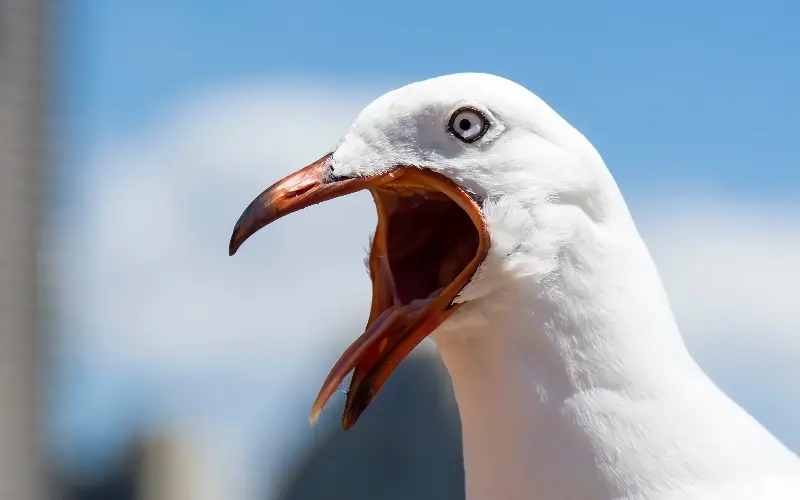
Gull numbers have plummeted as the UK cleans up its streets and landfill sites.
A survey of the birds has shown that the population is in steep decline, partly because of improvements to waste management.
With less rubbish going to landfill, and fisheries reducing how much leftover produce they discard, gulls have had fewer food sources.
Avian flu, changes in land use and agricultural practices and climate change also played a part, researchers said.
The report, published by the British Trust for Ornithology (BTO), found that the total number of gulls wintering in the UK had fallen from 3.9 million to just under 2.5 million over the past two decades.
The survey was carried out over the winters of 2023 and 2024 and targeted the black-headed gull, common gull, lesser black-headed gull, herring gull, great black-backed gull and Mediterranean gull – a relatively recent arrival that is still only present in small numbers in the UK.
It found all species apart from herring gulls, whose numbers had remained largely stable over the past 20 years, had declined.
The great black-backed gull, the UK’s largest, saw a 66 per cent drop in numbers wintering in the UK. Black-headed gulls declined by almost half.
Common gull numbers fell by 26 per cent, and those of lesser black-backed gulls dropped by 47 per cent.
The Mediterranean gull population had increased thanks to the creation of new wetland habitats, improved breeding success and climate change.
The report said “reform in waste management” had possibly contributed to the decline.
It added that other reasons “may include (but are not necessarily limited to) changes to breeding habitat, human disturbance, increased predation (at breeding colonies), changes to fisheries policies (eg reductions in discards) and the effects of disease (including botulism and [bird flu])”.
For more than a decade, urban councils and businesses have been at war with the gulls, which have increasingly sought food and habitats alongside humans in city centres.
The birds may have suffered from improved waste regulations in the UK, including standardised collections, separate recycling and food waste collections and the introduction of lidded containers and sealed bins.
In the past 20 years, Britain has drastically reduced its dependence on landfills, which are feeding hotspots for birds. Government statistics show municipal waste sent to landfill has dropped by roughly 90 per cent since 2000.
Waste sent to recycling and incineration
Between 2019 and 2024, the estimated amount of residual waste sent to landfill decreased by 17 per cent from 45.5 million tonnes to 37.8 million tonnes or from 808kg per person to 645kg per person – a decrease of 20 per cent, the Government said.
A lot of this waste was redirected to recycling and incineration, while many landfills became covered and food less accessible, leaving gulls without their popular source of scraps, fish and meat.
The UK and EU also banned fish discard, the practice of throwing undersized edible dead bycatch overboard by trawlers, in 2015, although evidence obtained by Open Seas reveals it continues illegally.
The discards were a big part of the diet for species such as herring gulls and great black-backed gulls, leading to concern this may have affected population numbers.
Emma Caulfield, a BTO research ecologist and survey co-ordinator, said: “These figures are pretty alarming, and suggest that these enigmatic gulls are having a tough time across the UK.
“Despite these smart and adaptable birds figuring out how to live alongside us, the ever-changing world appears to be moving too fast for them to keep up. By understanding the problems these familiar and widespread birds are facing, we can hope to reverse some of the negative trends and work to ensure that they remain a part of our cherished seaside environment.”