



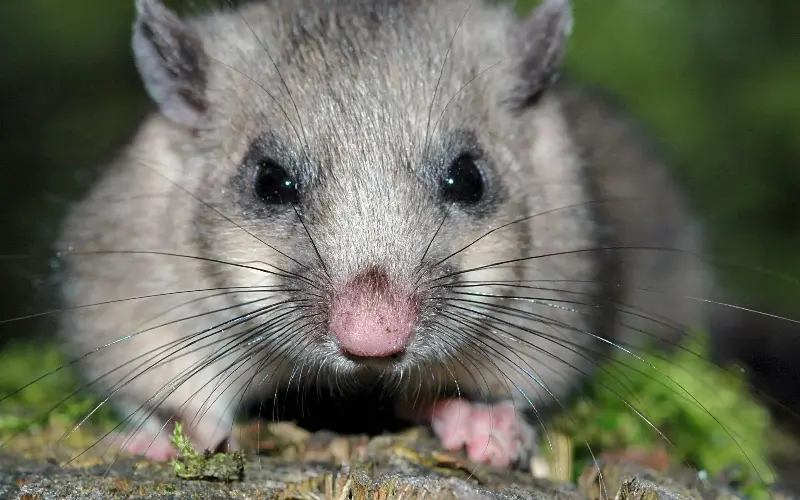
For many people, a sign that spring is finally here is when the daffodils bloom and the crocuses burst into life. For increasing numbers of residents of the Chilterns, however, there is another, more disturbing portent that the seasons are changing: when a certain rodent comes out of hibernation.
“It’s utterly awful,” says Maggie*, 49, a civil servant who lives in a four-bed detached cottage in a rural village in Hertfordshire, one of four counties covering the area.
Anyone who’s had even one mouse or rat in their home might understand the distress an infestation can cause. But in the valleys and rolling fields of the Chilterns – a vast area covering about 600 square miles north-west of London – the rodent in question is one most people have never even heard of: the Glis glis.
Such is their menace that every one of the residents who spoke with The Telegraph insisted on remaining anonymous and refused to identify even the village in which they lived, fearing it would affect their property price or house insurance.
“The first sign is the sound of scratching in the ceiling above the bedroom,” Maggie says, with increasing horror. “Sometimes we even hear scurrying up the walls. Then the screeching starts as they fight. They’re so noisy. I’ve had nights when my husband is away where I’ve been in tears, unable to sleep because of the racket.
“They chew through everything – concrete, wood, cables. We’ve had our burglar alarm go off because they’ve eaten through it, and we know people who have had fires in their homes because the electrics have been gnawed to pieces.
“Neighbours have discovered them nesting in their garages, floors – one friend even found some in her kitchen cupboard eating the food, and another saw one coming up in her toilet. It was hideous.”
Glis glis are native to continental Europe – and are also known as edible dormice thanks to their consumption by the Romans – but were introduced to the UK by zoologist Walter Rothschild around the beginning of the 20th century. They go into hibernation around November and emerge when the temperatures start to rise, anywhere from March to May. Just about now, in fact.
In 2018, a formal assessment of all British mammals estimated that the small squirrel-like animals numbered about 23,000. Today, experts think the total has more than quadrupled, causing havoc to both natural and domestic habitats.
“Numbers are always tricky with any smaller mammal, as monitoring is very time- and effort-intensive and Glis glis are elusive and nocturnal, but it would be a fair estimate that there are in the region of 100,000 at any one time,” says Matt Larsen-Daw, chief executive of the Mammal Society.
“The success of this population can be ascribed to the plantations and mature woodlands of the Chilterns which closely mimic the high forest habitat favoured by Glis glis in its natural haunts in Continental Europe.
“As well as causing problems in domestic environments, they are also a threat to forestry; they take bark off tree trunks to access the tender cambium layer below when other food sources are scarce.”
But it’s in houses where these vermin seem to be creating most headaches. As numbers have increased, the Glis glis – which are related to the native hazel dormouse – have been abandoning their usual countryside habitats to seek out the warmth and shelter in homes such as Maggie’s, causing significant damage. They’ve even started moving into urban areas such as Oxford and London; the pest-control company Pest UK says a record 145 Glis glis were once removed from a single house in the capital.
There is an added layer of complication when it comes to eradicating them because while they are a non-native invasive species, they are also protected under the Wildlife and Countryside Act 1981.
“It means an infestation should only ever be tackled by a British Pest Control Association member who holds the required specialist licence,” says Niall Gallagher, technical manager at BPCA.
“A targeted and approved trapping programme using humane methods is the only legal way to removing an active Glis glis infestation, and this may take several weeks.”
Fewer than 100 of these specialist licences were issued in 2008, yet just under a decade later 453 licences were issued and more than 2,500 Glis glis were reported as killed.
Despite the licensing condition requiring users to send an annual record of all edible dormice captured under its powers by Jan 31 each year, Natural England has denied having any more up-to-date figures.
Beyond the legal obstacles, there is the challenge of actually eradicating them successfully, as they are likely to return.
“The only real solution is to try and block potential entry points,” says Larsen-Daw. “Certainly, what people cannot do is trap and then release outside the house – as release of a non-native is an offence, and they will just come back anyway.
“Cats are generally the best deterrents, though it would not be appropriate to deliberately introduce a cat into a loft space where Glis glis are nesting for the purposes of having it kill them, as they still fall under the protection of the Wildlife & Countryside Act.”
“But if your cat has access to spaces that might otherwise be occupied by Glis glis, you are far less likely to have a problem. Other than that, it really is just making it difficult for them to come in and securing food stores so they don’t have the incentive to stay.”
Desperate homeowners who spoke to The Telegraph, however, say they are often forced to take things into their own hands, regardless of the law.
“Pest-control companies will often say they can get rid of them, but we’ve paid thousands of pounds over the years, and the Glis glis are usually back within weeks,” said one resident.
“So, you’ll hear of people trying all sorts of things to catch them and kill them. Rat poison works, but when people have children or pets they don’t like leaving that around the house, so instead they’ll use the Tom and Jerry-style snap traps or little pads that electrocute them.
“Sometimes people try to clobber them with golf clubs or brooms or even shoot them with air rifles, but they’re so quick they often get away.
“At the end of the summer when they go back to hibernate you’ll often hear people comparing stories. All the women will be sharing horror stories about where they’ve found them in their kitchen or bedroom, while the men are all comparing how many they’ve killed – ‘75 this year!’ ‘Over a hundred!’ – like a bizarre competition. But outside of the village we don’t really talk about it at all. It’s a taboo subject because we know it might put people off the area.”
Indeed, estate agents say infestations can affect property prices. And sellers need to be honest about the situation – under the Digital Markets, Competition and Consumers Act 2024, property listings must not omit information that the average consumer needs to make an informed transactional decision.
“The presence of Glis glis can absolutely affect price, but it tends to be highly location-specific, and I’ve only really had them come up as an issue in the Chilterns, particularly around Beaconsfield and Amersham,” says Robin Edwards, a property buying agent at curetons.co.uk.
“They can easily knock confidence and therefore value, especially if there is evidence of recurring infestations, chewed wiring or damaged insulation.
“Typically, the problem shows up in larger detached houses near woodland, where roof spaces offer a potential warm and cosy nesting option. If a seller is aware of an ongoing or previous infestation, legally they must disclose it on the property information forms. Failure to do so could lead to a misrepresentation claim later. The key factor is whether it’s historic and controlled or active and unmanaged – that’s when it can really cause issues.”
Maggie, who has lived in the area all her life, says she has no plans to sell but is worried about the warmer months ahead and the damage that may be wrought.
According to the Association of British Insurers, most standard home insurance policies exclude damage caused by vermin, including issues such as chewed wiring, gnawed pipes, damaged insulation, or structural damage from persistent nibbling.
“As the sun starts shining, I dread them coming out of hibernation and the scratching and the squeaking to begin again,” she says. “We will be sitting outside in the garden and they will be up in the trees taunting us. People who visit from outside the area can’t believe what a noise they make.
“When people see pictures of Glis glis they say: ‘Oh aren’t they cute!’ but they have no idea what a nightmare it can be. I find I can’t wait for the winter months to start again!”
*Name has been changed