



More than one third of Texas students left college without earning a degree, hindering the state’s progress toward workforce readiness goals, according to a report released Wednesday.
Roughly 331,400 students started a two-or four-year college within one year of graduating high school between 2017 to 2022 — but left without a degree. Their departures total $1.09 billion in student debt, according to a report by Philanthropy Advocates, a network of Texas foundations.
“The data that we report, as a state, is driven around just college enrollment … overlooking the completion issue and the implications it has for students,” said Jacob Kirksey, an associate professor of educational policy at Texas Tech University, who worked on the report.
After eight years, students who finished college make almost $18,000 more than Texans who left. Students who “stop out” earn around the same amount as those who didn’t enroll in college.
“Students who didn't attend college at all don't have college debt, whereas stop-outs do,” Kirksey said. “Given that their wage potential is about the same, … students are now burdened with additional finances that they have to take care of somehow.”
While students who finish college borrow more, they owe less per attempted credit than those who didn’t complete their degree, the report notes.
To compile the report, researchers combed through records across three different state agencies to trace roughly 913,400 students’ pathways through high school, college and the job market.
Texas leaders have set ambitious goals to prepare the natives to meet workforce demands. By 2030, 60% of students must complete a certification or degree. Last year, the postsecondary attainment rate was 52%.
The state has also made significant investments toward these aims. Public schools are trying to find ways to introduce students to high-demand fields, as early as elementary school. Texas oversees student loan programs, but if students don’t obtain a degree, it’s a weak return on investment for the state, Kirksey said.
It also matters who is leaving college. A disproportionate number of students who stop attending college are economically disadvantaged, Kirksey said. In a 2021 study, former community college students cited tuition, living expenses and the loss of financial aid eligibility as main reasons for why they left, despite their strong academic standing.
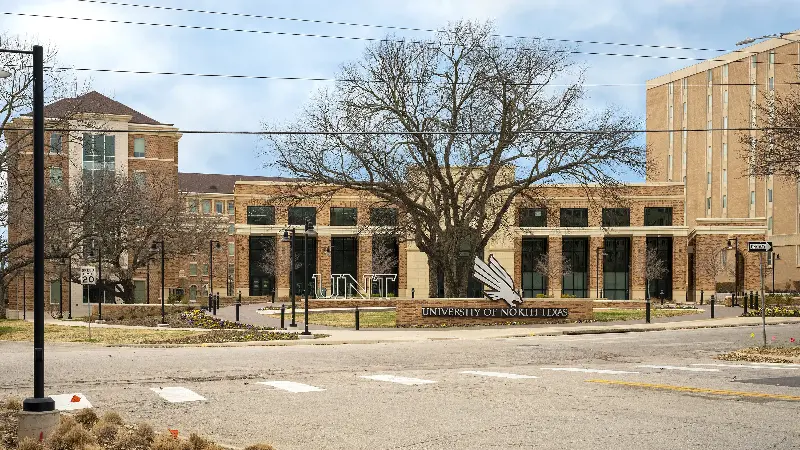
Universities across Texas are making strides to draw students back. For example, Texas State University used federal and state grant funding to help former students, affected by the pandemic, finish their degrees. The University of North Texas received a $500,000 grant from the Andrew Carnegie Foundation to conduct outreach to students who left.
While state leaders hail record-high enrollment numbers, Kirksey said, there’s more to be done to help those students stay in college.
For starters, Kirksey said, the state needs to commit resources to tracking them.
“The first step is reporting some data,” Kirksey said.
The DMN Education Lab deepens the coverage and conversation about urgent education issues critical to the future of North Texas.
The DMN Education Lab is a community-funded journalism initiative, with support from Bobby and Lottye Lyle, Communities Foundation of Texas, The Dallas Foundation, Dallas Regional Chamber, Deedie Rose, Garrett and Cecilia Boone, Judy and Jim Gibbs, The Meadows Foundation, The Murrell Foundation, Ron Steinhart, Solutions Journalism Network, Southern Methodist University, Sydney Smith Hicks, and the University of Texas, Dallas. The Dallas Morning News retains full editorial control of the Education Lab’s journalism.