



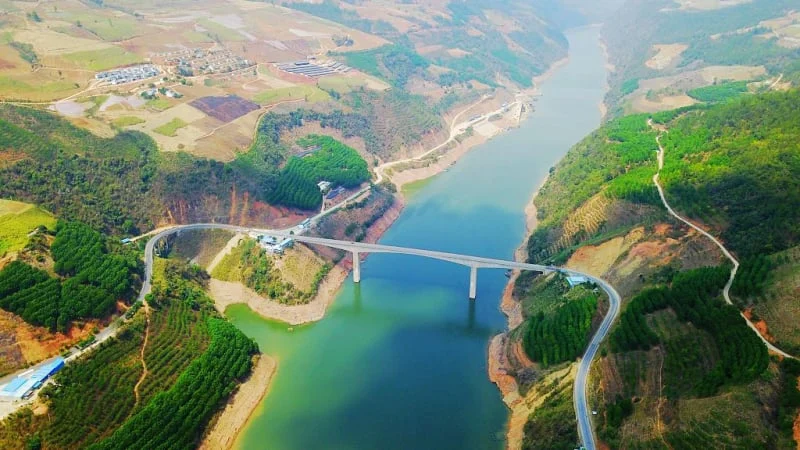
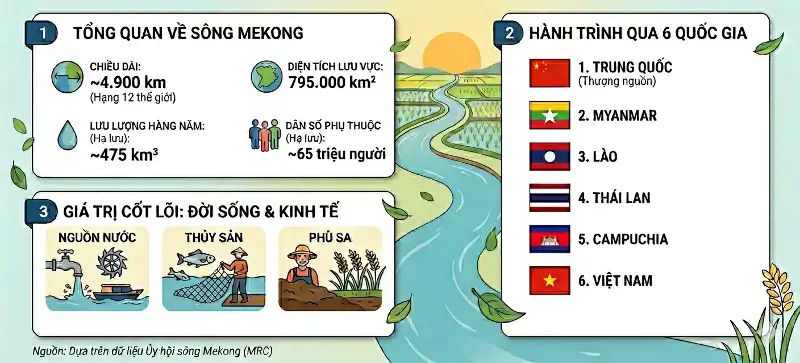
According to the Mekong River Commission (MRC), the Mekong River is approximately 4,900 km long, ranking 12th in the world in length, with a drainage basin covering 795,000 km² and an average annual flow rate of about 475 km³ of water.
This river flows through six countries: China, Myanmar, Laos, Thailand, Cambodia, and Vietnam, including five ASEAN countries. Few rivers in the world have such a profound impact on the economy , environment, and human lives as the Mekong. In the lower reaches alone, approximately 65 million people depend directly on the water, fisheries, and sediment from this river.
The Mekong River originates in Tibet and flows across the Southeast Asian continent.
Many people often associate the Mekong with images of rice paddies in Vietnam or floating villages on Tonlé Sap Lake in Cambodia. But in reality, the river's source lies in a completely different place: the frigid Tibetan Plateau.
The Mekong River originates in the Three Rivers Plain – an area known as the "Source of Three Rivers," where both the Yellow River and the Yangtze River are born. In its upper reaches in China, the Mekong is called the Lancang River, flowing through Yunnan Province with its rugged mountainous terrain, deep gorges, and swift currents.
According to the MRC, the upper reaches of the Mekong River stretch approximately 1,955 km, mainly flowing through narrow valleys cutting across the plateaus and mountain ranges of southwestern China. Leaving China, the Mekong enters Southeast Asia via Myanmar, then follows the Laos-Thailand border before flowing into Cambodia and Vietnam. The changing terrain has altered the river's course; from a turbulent flow in the high mountains, the Mekong gradually becomes gentler as it enters the lowlands.
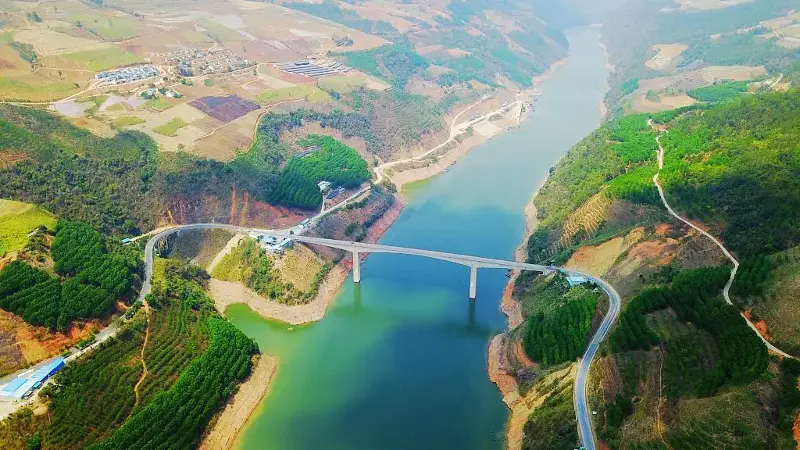
The lower section, approximately 2,390 km long, is the most densely populated and economically significant area. It is also home to some of the most important fisheries, agricultural , and trade systems in Southeast Asia.
One of the most unique aspects of the Mekong lies in Cambodia, where the river connects with Tonlé Sap Lake – the largest freshwater lake in Southeast Asia. During the rainy season, the Mekong River rises so much that it pushes Tonlé Sap upstream, causing water to flow into the lake instead of out as usual. During the flood season, the area of Tonlé Sap Lake can increase five to six times, from approximately 2,500 km² to 16,000 km². The volume of water also increases from about 1 km³ to nearly 80 km³.
Asia's giant "rice bowl" and "fish bowl".
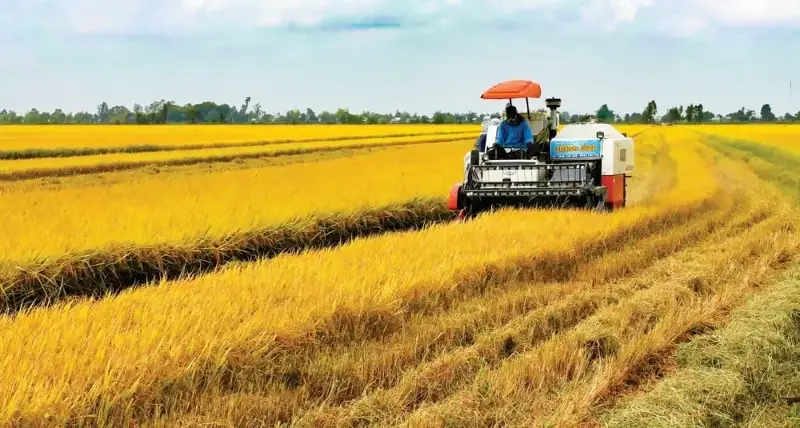
More than just a geographically significant river, the Mekong is a vital economic foundation for many Southeast Asian nations. The alluvial deposits the Mekong has carried over thousands of years have created the Mekong Delta – one of the most fertile regions in the world. According to numerous studies, the Mekong Delta region of Vietnam currently contributes approximately 50% of the country's rice production and is a leading global rice exporting center.
Beyond rice, this delta region is also the fruit and seafood capital of Vietnam. Millions of hectares of arable land are nourished by the alluvial soil and water from the Mekong River.
On a regional scale, the Mekong is considered one of the largest freshwater fisheries systems on the planet. According to the Mekong River Commission, the annual natural fish production in the lower Mekong reaches approximately 2.3 million tons, with an estimated economic value of around US$11 billion.
This is also the world's largest inland fishery. Fish and seafood products from the Mekong play a vital role in food security in Cambodia and Laos. In Cambodia, fish provides up to 81% of the animal protein in the population's diet, while in Laos it is about 48%.
In Cambodia and Vietnam's Mekong Delta alone, nearly 7 million people depend directly on fishing and aquaculture related to the Mekong River for their livelihoods. One hectare of wetland around Tonlé Sap Lake can even produce up to 230 kg of fish per year.
It's no surprise that the Mekong is often referred to as the "backbone" of Southeast Asia. The entire network of rivers, canals, and wetlands surrounding the Mekong sustains the livelihoods of tens of millions of farmers, fishermen, and riverside communities.
One of the most biodiverse regions on the planet.
Besides its rich economic resources, the Mekong River is also a "biological treasure" of the world. According to biological statistics in the Mekong basin, the region has more than 20,000 plant species, about 430 mammal species, 1,200 bird species, 800 reptile and amphibian species, and about 850 freshwater fish species. Many of these species are extremely rare. The Mekong is home to the giant Mekong catfish – one of the largest freshwater fish in the world, which can grow to over 3 meters in length and weigh around 300 kg.
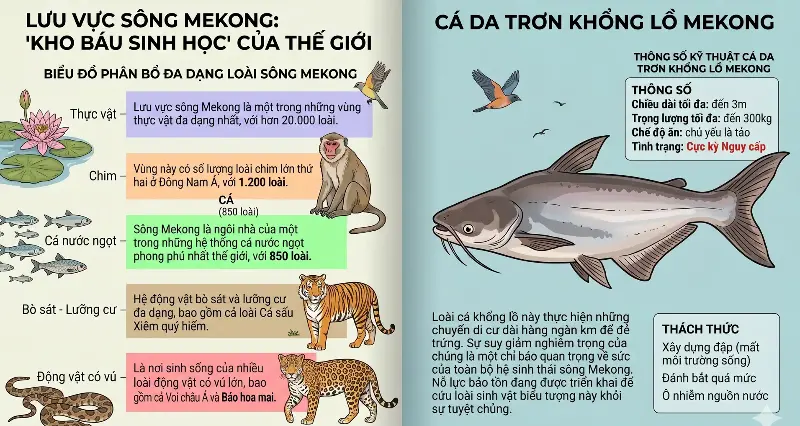
The wetlands around Tonlé Sap and the lower Mekong are also a haven for waterbirds. Rare species such as the milk heron, great egret, spotted pelican, and grey-headed fish eagle are found in this ecosystem. According to UNESCO, the Tonlé Sap Biosphere Reserve covers more than 1.48 million hectares and is one of the most important ecological areas in Southeast Asia.
What makes the Mekong unique is its seasonal "flooding rhythm." Each year, monsoon winds bring massive amounts of rain to the lower basin, causing water levels to rise between August and October. The floodwaters inundate the areas, carrying silt and nutrients, creating ideal conditions for fish breeding and plant growth.
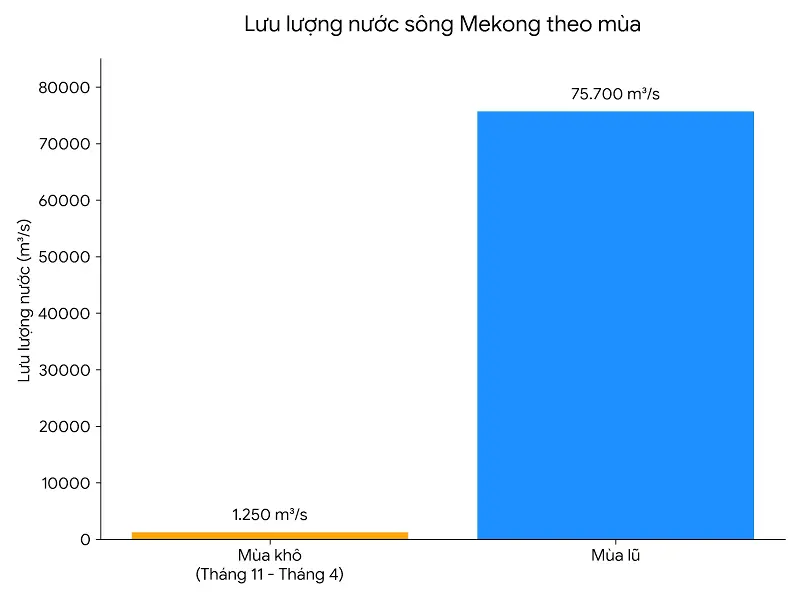
The dry season typically lasts from November to April of the following year. During this period, the Mekong's water flow decreases sharply, sometimes reaching only about 1,250 m³/s. Conversely, during the flood season, the peak flow has reached 75,700 m³/s. This enormous difference is what creates the unique hydrological characteristics of the Mekong.
Major challenges are threatening Southeast Asia's longest river.
Despite remaining a source of livelihood for tens of millions, the Mekong is now facing unprecedented pressures. In recent decades, the construction of numerous hydroelectric dams in the upper and middle reaches has altered the river's natural flow. Experts believe that damming the river and accumulating water has significantly reduced the amount of sediment flowing downstream, leading to numerous negative consequences for agriculture and fisheries.
Climate change is also exacerbating saltwater intrusion in the Mekong Delta. According to numerous studies, the region is simultaneously facing rising sea levels and natural land subsidence.
The saltwater intrusion in 2019-2020 affected 10 out of 13 provinces in the Mekong Delta. The 4 grams/liter salinity boundary impacted 42.5% of the region's natural area, equivalent to 1,688,600 hectares. The drought and saltwater intrusion also affected approximately 96,000 households, or about 430,000 people, living in coastal provinces.
Not only Vietnam, but also Cambodia's Tonlé Sap Lake has recorded many unusual fluctuations. Experts warn that if the natural flow continues to be drastically altered, the Mekong ecosystem could lose its ability to self-recover, a capability it has maintained for thousands of years.
According to Dr. Naruepon Sukumasvin of the International Mekong River Commission Secretariat, research on the sustainable management and development of the Mekong basin shows that the amount of alluvial deposits in the Mekong Delta is seriously declining.
While in 2007, this region received approximately 97% of its natural sediment, by 2020 that figure had dropped to only about 30%, and is projected to fall to a mere 4% by 2040. Furthermore, changes in river flow could result in an estimated loss of $1.57 billion in the value of fisheries production along the Mekong River corridor.
Demographic challenges are also testing the resilience of the Mekong River basin. The total population of the basin was estimated at 72.1 million in 2020 and is projected to reach approximately 100 million by 2040. Despite significant progress in poverty reduction and growth promotion, inequality remains prevalent.
Nevertheless, the Mekong remains one of the world's most strategically important rivers. From the Tibetan Plateau to the South China Sea, this river carries not only water and sediment, but also the history, culture, and livelihoods of a vast region of Southeast Asia.