


Many provinces and cities are experiencing complex weather conditions, with some areas in Central and Southern Vietnam recently experiencing frequent and prolonged heavy rains. For those living in apartment buildings or residential areas lacking covered parking spaces, parking their cars in the rain for hours, even days at a time, is unavoidable. Rainwater is not the only cause of car deterioration, but when combined with dirt, mud, high humidity, and environmental pollutants, the aging process of certain parts can occur more rapidly.
According to automotive repair and maintenance technicians, prolonged humidity can accelerate corrosion in hard-to-clean areas, while standing water in seals, door gaps, or drainage systems can cause long-term problems. Therefore, cars frequently parked outdoors during the rainy season should be cleaned and inspected regularly, especially after heavy rains or when driving through flooded areas.
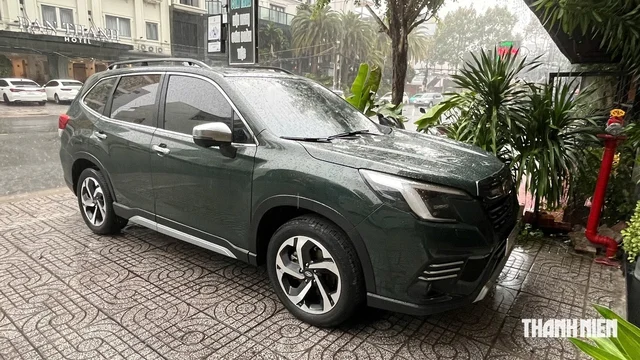
Parking a car in the rain for extended periods can cause moisture to accumulate in crevices, seals, drainage systems, and various metal parts, increasing the risk of degradation and corrosion.
Photo: BA HUNG
Here are some car parts that are more likely to deteriorate when parked in the rain for extended periods:
Paint and exterior details are easily affected.
Car paint surfaces are designed to withstand the elements, including rainwater. However, if a car is constantly exposed to rain without being cleaned, dirt and contaminants can accumulate on the surface, forming a buildup of residue.
In particular, after rainwater evaporates, remaining minerals and dirt can form spots on paint, glass, or exterior details. If left for a long time, cleaning will be more difficult. According to Mr. Le Minh Tuan, a technician working for an auto garage in Cat Lai ward, Ho Chi Minh City, car owners don't necessarily need to wash their cars immediately after every light rain, but should clean their cars after heavy rains, especially when the car is covered in mud or dirty water. Avoid using a dry cloth to scrub hard on surfaces with a lot of dust, as this can create small scratches.
Door and trunk rubber seals
The rubber seals around the doors, trunk, and windows are designed to prevent water and dust from entering the interior. When a car is parked in the rain for extended periods, and is frequently exposed to water and humidity, these areas easily trap dirt, leaves, or other contaminants.
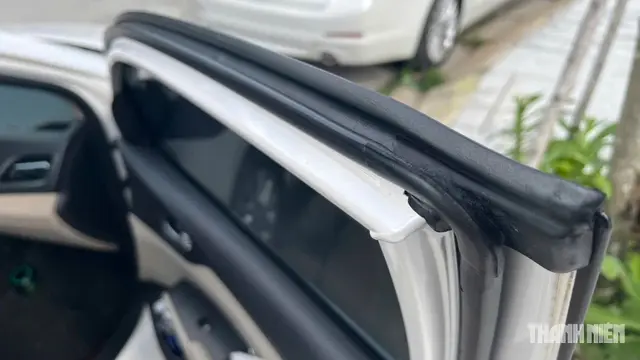
If the door seals are aged, cracked, or deformed, water can leak into the cabin more easily.
Photo: BA HUNG
Notably, the door seal itself doesn't usually get damaged by just a few days of rain. However, if it's aged, cracked, or deformed, water can leak into the cabin more easily. Therefore, after prolonged periods of rain, users should open the doors to check the seals and edges, and wipe away any signs of water accumulation.
The brake system may develop surface rust.
This is the most noticeable issue after a car has been parked outdoors in damp conditions for an extended period. Rainwater and humidity can cause a thin layer of rust to appear on the brake disc surface. This is usually not serious and may disappear after a few braking cycles once the car is driven again.
However, if the vehicle is parked for extended periods in humid environments, especially if the braking system already shows signs of corrosion or the vehicle is driven infrequently, the rust may become more noticeable.
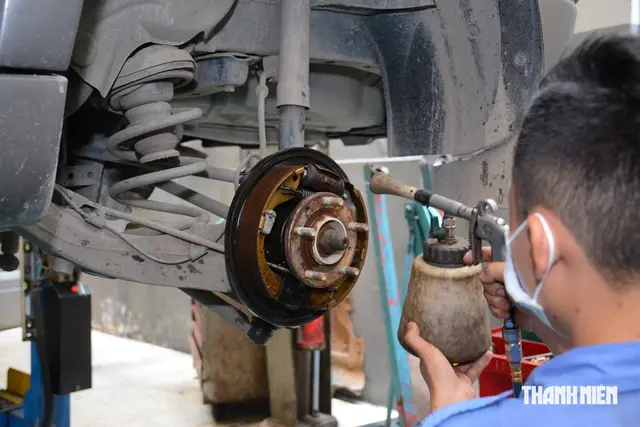
Rainwater and humidity can cause a thin layer of rust to appear on the surface of brake discs.
Photo: BA HUNG
Technicians recommend that after a long period of parking in the rain, when starting to drive, you should check the brakes at low speed in a safe area. If you hear unusual grinding noises, the car pulls to one side, or braking effectiveness decreases, you should have the car inspected instead of continuing to use it normally.
Metal parts under the vehicle
The undercarriage of a vehicle is frequently exposed to water, mud, and moisture, yet it's difficult to observe and clean regularly. Metal parts, bolts, brackets, or areas with protective coatings may show signs of oxidation over time.
This risk is more noticeable for vehicles that are frequently parked outdoors, driven through flooded roads, or in muddy areas. Dirty water remaining under the vehicle for extended periods can accelerate the corrosion process.
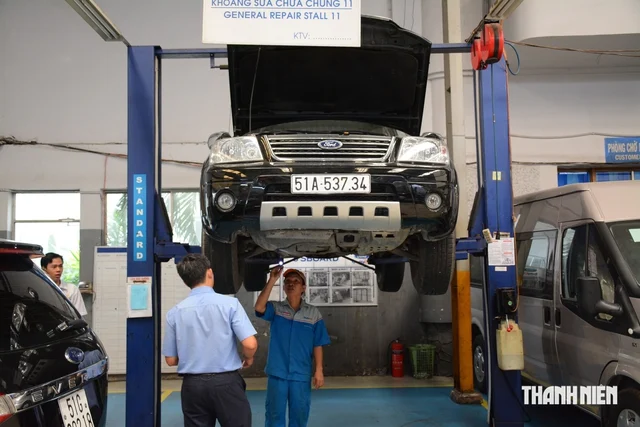
Dirty water remaining under the car for extended periods can accelerate the corrosion process.
Photo: BA HUNG
Therefore, after heavy rains, car owners should check and clean the undercarriage, especially if the car has driven through flooded areas.
Drainage systems and door gaps are prone to clogging.
Rainwater in a car is drained through numerous channels and drainage holes. Leaves, dirt, or small debris can get trapped in the areas around the windows, doors, trunk, and sunroof on models equipped with this feature. When the drainage system is blocked, water can accumulate or flow into unwanted areas. This is one of the reasons why the car floor, trunk area, or other parts of the cabin become damp.
According to technicians, these are the areas that should be checked after prolonged periods of rain, especially for vehicles parked under trees or in places with a lot of fallen leaves.
Interior furnishings are prone to mold and mildew.
The interior is a particularly vulnerable area when a car is parked outdoors in the rain for extended periods. If the door seals, windows, sunroof, or drainage system are faulty, water can leak into the cabin. Prolonged high humidity not only creates unpleasant odors but can also cause mold growth on floor mats, seat upholstery, and other interior materials. Significant water infiltration can also damage electrical systems and connectors located under the floor.
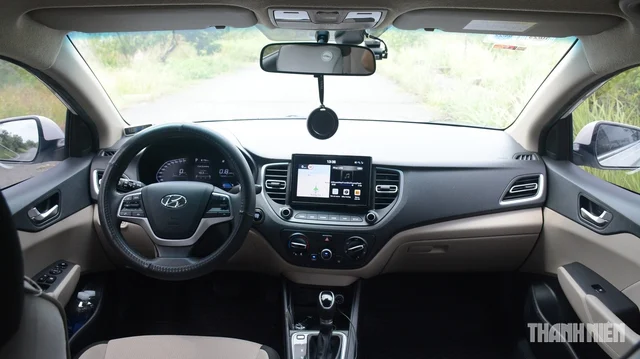
The interior is an area that requires special attention when parking a car in the rain for an extended period.
Photo: BA HUNG
Therefore, if you notice dampness in the car floor, a musty smell, or water appearing in the trunk after rainy days, car owners should find the cause and address it promptly.
Generally, parking a car outdoors in the rain doesn't necessarily mean it will break down quickly. Most car parts are designed to function in various weather conditions. However, prolonged exposure to rain, combined with dirt, mud, and high humidity, can accelerate deterioration if the car isn't regularly cleaned and inspected. For cars that can't be parked indoors, owners should pay attention to cleaning areas prone to water accumulation, checking seals and drainage systems, cleaning the undercarriage after driving through flooded areas, and keeping the interior dry and well-ventilated. These are simple ways to minimize the impact of weather and maintain the car's condition during the rainy season.