


Why do people over 50 need protein for effective fat loss?
Losing fat can be more difficult after age 50. At this age, the body may be less responsive to protein from food, while muscle loss occurs more rapidly if you are sedentary, have a poor diet, or suffer from chronic diseases. Muscle loss not only affects strength but also reduces mobility, increases the risk of falls, and makes weight management more challenging.
The minimum protein requirement for healthy adults is typically set at around 0.8g/kg body weight/day. However, many geriatric nutrition experts recommend that individuals 65 years and older aim for around 1.0-1.2g/kg/day, unless contraindicated, especially when at risk of muscle loss or engaging in strenuous physical activity.
For example, a person weighing 60kg might need approximately 60-72g of protein per day, which is equivalent to 1.0-1.2g/kg. Actual needs depend on age, activity level, health status, and kidney function. More importantly, protein should be distributed relatively evenly across meals, rather than concentrated in just one meal.
10 high-protein foods that people over 50 should prioritize.
Fish: Fish is a high-quality source of protein, and some fatty fish like salmon, mackerel, and sardines provide omega-3 fatty acids, which are very good for health. 100g of cooked fish usually provides about 20-25g of protein, depending on the type. Fish can partially replace red meat in a weight-loss or fat-reduction diet, helping to diversify protein sources. People over 50 should prioritize steamed, boiled, grilled, or braised fish with moderate amounts of oil and salt instead of fried fish.
Chicken: Chicken, especially skinless chicken breast, provides high-quality protein but is relatively low in fat. 100g of cooked chicken breast can provide approximately 30g of protein. However, it's not necessary to eat only chicken breast. Other parts of the chicken can also be used in appropriate portions, and the skin should be limited if the goal is calorie control, fat loss, and muscle gain.
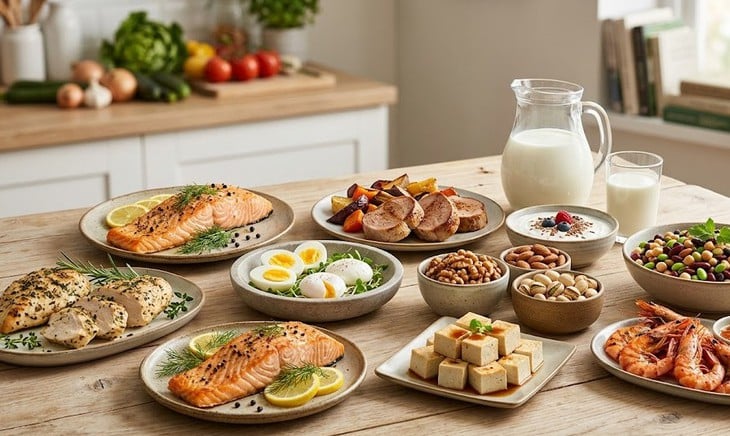
Protein-rich foods help people over 50 maintain muscle mass, reduce fat, and slow down aging. (Illustrative image by AI)
Eggs: Eggs are a protein-rich food, easy to prepare, and provide many vitamins and minerals. One large egg provides about 6-7g of protein. Eggs can be eaten for breakfast or combined with vegetables and whole grains to create a balanced meal. Healthy people don't necessarily need to eliminate the yolk just because of cholesterol concerns. However, those with dyslipidemia or cardiovascular disease should adjust their egg intake according to their overall diet and consult their doctor if necessary.
Greek yogurt : Greek yogurt typically has a higher protein content than regular yogurt due to the concentration during production. Depending on the product, a serving can provide approximately 10-20g of protein. It's best to choose unsweetened or low-sugar varieties, especially for those looking to lose fat or manage weight; yogurt can be combined with berries, low-sugar fruits, nuts, or oatmeal to increase fiber and nutritional value.
Milk: Milk provides complete protein along with calcium and several vitamins and minerals essential for bone health. A 240ml glass of milk typically provides about 8g of protein. People over 50 can choose low-fat or unsweetened milk depending on their energy needs and health condition. For those with lactose intolerance, lactose-free milk or suitable alternatives can be chosen.
Tofu and soybeans: Soybeans are one of the few plant-based protein sources that provide all the essential amino acids. Tofu is therefore a suitable choice for supplementing protein in the diet. 100g of tofu can provide approximately 8-15g of protein, depending on the type and processing method.

Steaming, boiling, making soup, or cooking tofu with vegetables are more suitable cooking methods than deep-frying.
Shrimp: Shrimp is rich in protein and relatively low in fat, making it suitable for calorie-controlled diets. 100g of cooked shrimp can provide approximately 20-25g of protein. Shrimp can be used in soups, steamed, boiled, or stir-fried with various vegetables. People with cardiovascular disease or hypertension should pay attention to the cooking method, especially limiting salty sauces.
Lean meats: Lean pork, lean beef, and other lean meats provide high-quality protein and can also supplement iron, zinc, and vitamin B12. However, red meat should not be the sole source of protein. Lean meats should be alternated with fish, poultry, eggs, and plant-based proteins. In particular, processed meats such as sausages, cold cuts, and bacon should be limited as they often contain high levels of salt and other ingredients that are not beneficial when consumed regularly.
Legumes: Black beans, red beans, green beans, lentils, and chickpeas provide both plant-based protein and are rich in fiber. A serving of cooked beans can provide approximately 7-9g of protein, depending on the type. The fiber in beans also helps increase feelings of fullness, supports blood sugar control, and promotes gut health; beans can be used in soups, salads, porridges, or combined with whole grains.
Nuts: Almonds, peanuts, pumpkin seeds, sunflower seeds, and several other types of nuts provide plant-based protein, unsaturated fats, and many micronutrients. However, nuts are high in energy density. Therefore, people trying to lose weight should not eat them indiscriminately. A small serving of about 20-30g/day is usually more suitable than eating large quantities; choose whole nuts that are not coated with sugar or excessive salt.