


In recent days, several areas in Central and Southern Vietnam have experienced continuous heavy rainfall, causing localized flooding on many roads. Particularly in some southern provinces and cities such as Ho Chi Minh City and Dong Nai , the past three days have seen continuous heavy rain in the evenings, causing severe flooding on many roads and creating significant difficulties for drivers. In these weather conditions, driving through flooded roads poses many risks and dangers. In fact, many drivers, especially new drivers lacking experience and skills, may encounter problems when driving through flooded roads.
Here are 5 common mistakes new drivers make when driving through flooded roads:
Trying to cross through water that's too deep.
With the heavy rains that have been occurring frequently in the evenings recently, many drivers returning home from work or dropping off their children at school are often impatient, wanting to get home early to avoid traffic jams in the rain. However, this easily exposes drivers to significant risks even before entering flooded areas. Many drivers observe other vehicles still able to move and carelessly follow suit, without knowing the exact depth or condition of the road surface beneath.
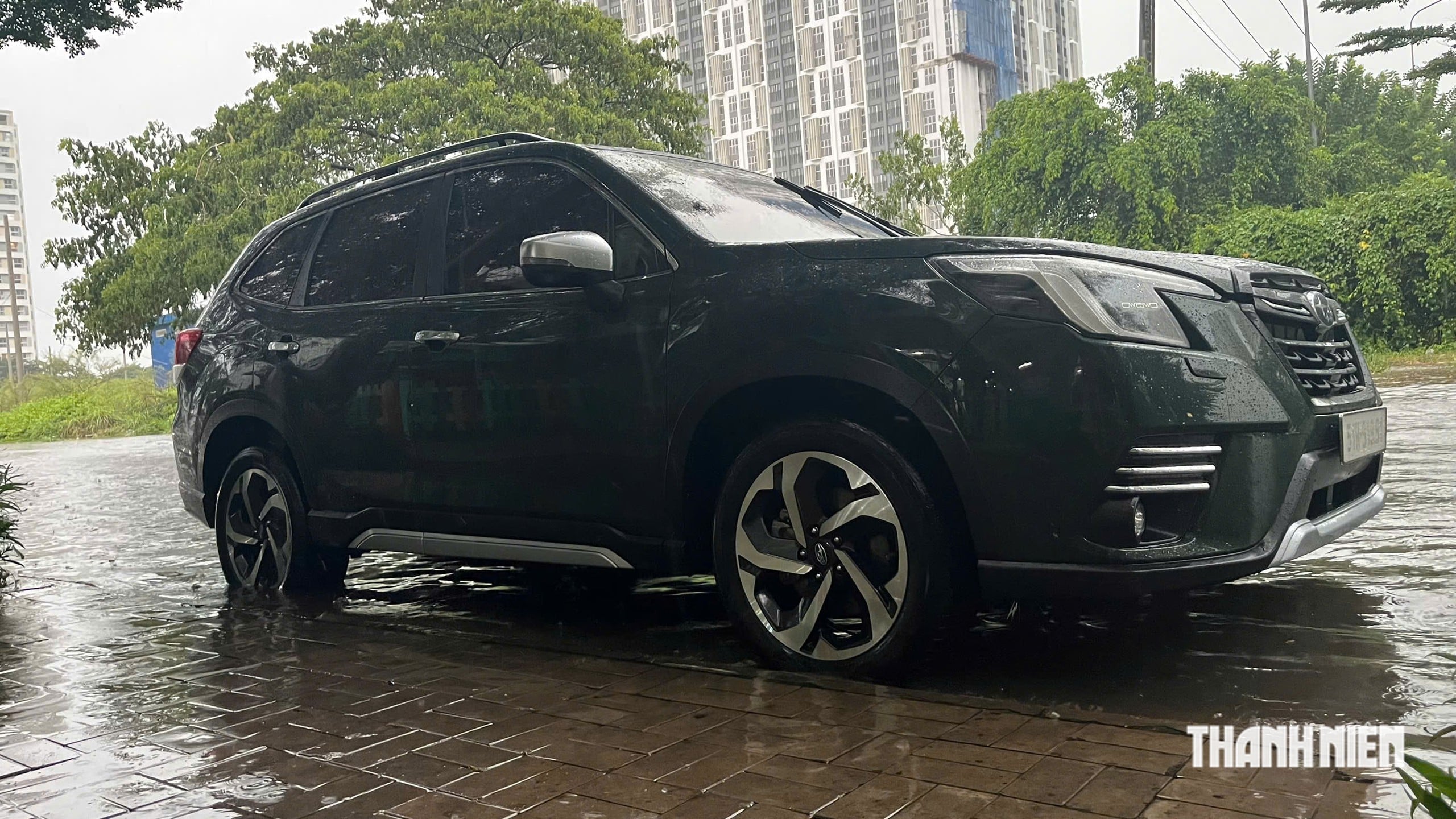
When encountering flooded roads, drivers should not be complacent; they need to observe and assess whether the vehicle can pass through.
Photo: HOANG CUONG
According to experienced drivers, when encountering flooded roads, drivers should not be complacent but should observe and assess whether the vehicle can pass through. If the water level is too high, it is best to find an alternative route instead of attempting to cross. Ground clearance and wading capability also vary between car models, depending on design, air intake location, ground clearance, and actual conditions.
Cars submerged in water not only endanger the engine, but many electrical components, sensors, control systems, chassis, oil, and lubricating parts can also be affected. Therefore, according to the experience of drivers who frequently travel during the rainy season, if you are unsure about the depth of the water or cannot see the road ahead, you should not risk your car.
Run fast to "glide" through the flooded area.
Some drivers believe that driving fast will help their car quickly get out of the water, minimizing the time it spends in the water. However, this method can create more risks.
At high speeds, the wheels create large waves, and water can be forcefully pushed into the engine compartment. At the same time, it becomes difficult for the driver to control the vehicle if potholes, manhole covers, deep holes, or other obstacles appear beneath the water's surface.
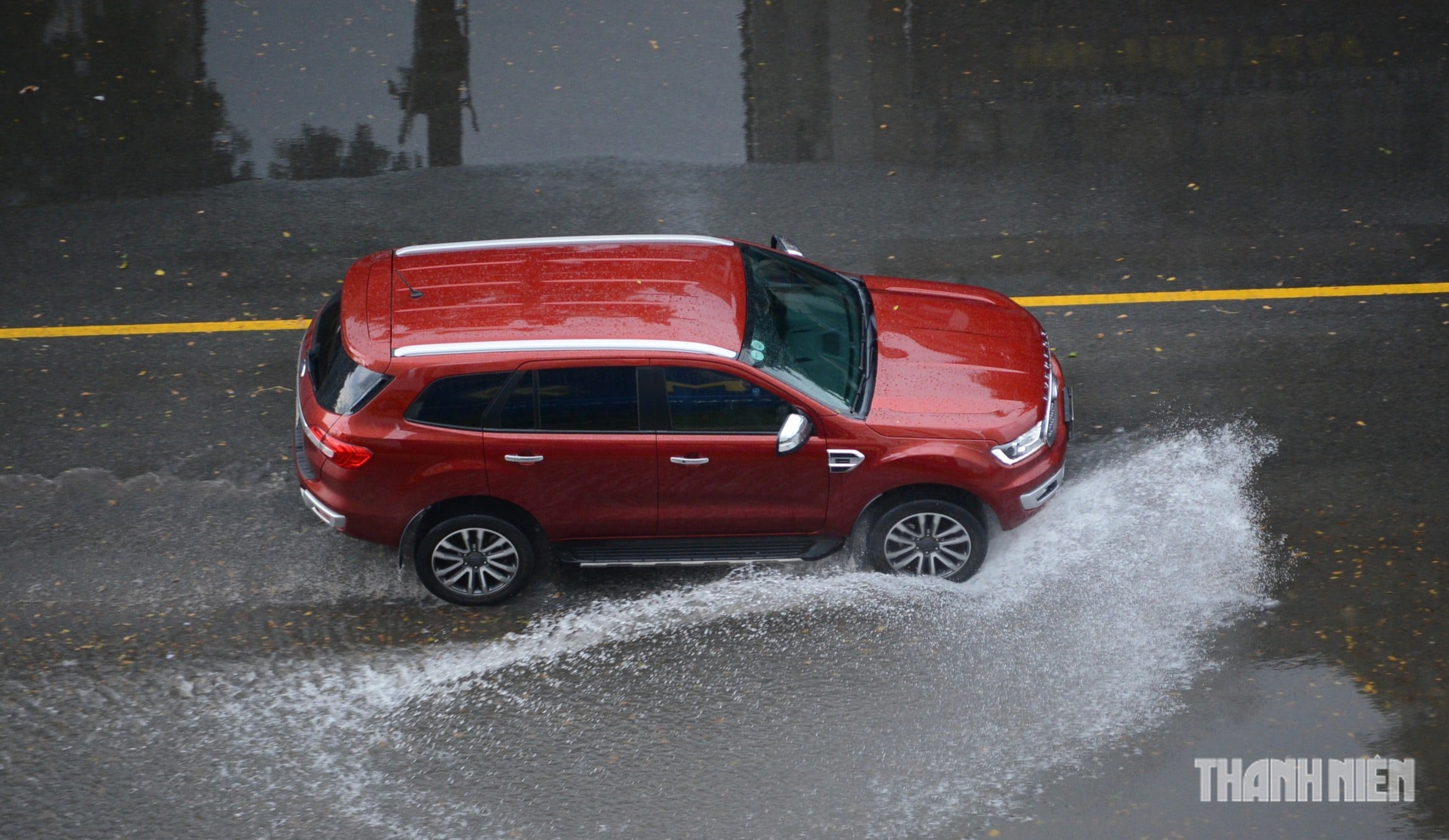
At high speeds, the wheels create large waves, and water can be forcefully pushed into the engine compartment.
Photo: HOANG CUONG
Therefore, if driving through flooded areas, drivers should drive slowly, maintain a steady speed, and avoid creating large waves. Sudden acceleration is also not recommended as it can increase the amount of water splashed into the air intake area.
Many experienced drivers advise driving slowly and steadily, rather than trying to speed through the water. The important thing isn't to get through the flooded section as quickly as possible, but to maintain control of the vehicle throughout the process.
Avoid driving close to or parallel with large vehicles such as trucks and buses.
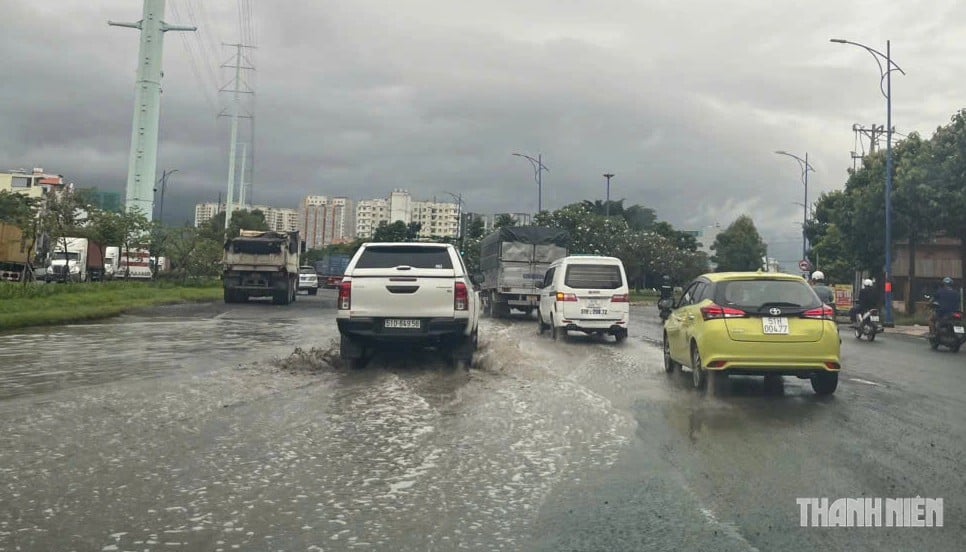
A truck or bus driving through a flooded area can generate significantly more water and waves than a passenger car. If driving too close or parallel, a car could be directly hit by waves from the larger vehicle, impacting its body and engine compartment. This is especially important to note on urban roads that frequently flood after heavy rain. Drivers must not only monitor the water level but also consider the movement of surrounding vehicles.
When driving through flooded areas, proactively maintain a safe distance from trucks and buses, and avoid driving parallel to large vehicles.
Photo: HOANG CUONG
According to experienced drivers, when driving through flooded areas, it's advisable to maintain a safe distance from trucks and buses, and avoid driving parallel to large vehicles. If you see an oncoming vehicle creating strong waves, reduce your speed accordingly and choose a safe location instead of attempting to overtake immediately.
They sped up as soon as they got past the flooded area, skipping the vehicle inspection.
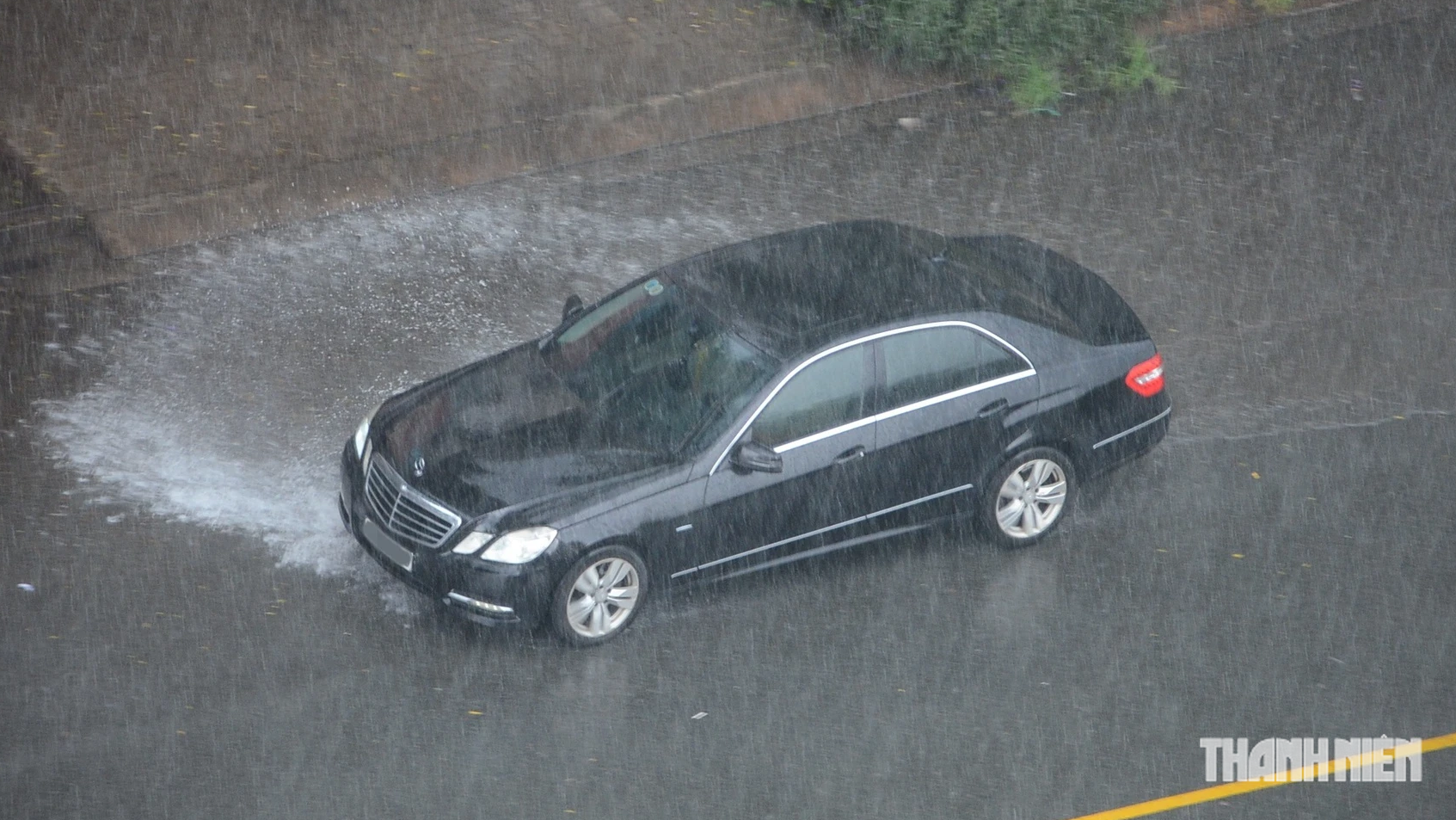
Escaping from flooded areas doesn't mean your car is completely safe. After passing through, water may still cling to the brakes, undercarriage, or penetrate other areas that require inspection. Therefore, drivers should slow down and gently apply the brakes to help dry the brake surfaces. This is also one of the recommendations given by manufacturers after a vehicle has passed through flooded areas.
Getting out of the flooded area doesn't mean the car is completely safe.
Photo: HOANG CUONG
If your vehicle has driven through relatively deep water, you should pay attention to any unusual signs such as erratic engine performance, warning lights appearing, abnormal brake behavior, intermittent electrical system issues, or strange noises coming from the vehicle. If you suspect deep water ingress, you should take your vehicle to a service center for inspection of the engine, oil, transmission, electrical system, brakes, and undercarriage components.