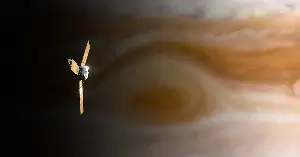
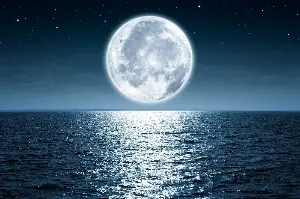
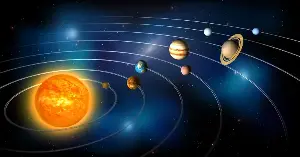
The Moon is so far from Earth that, using its average distance, you could line up every other planet in the solar system between us and still have about 4,400 kilometres left over.
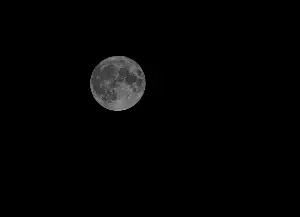
Moment Blue Origin rocket explodes during launch pad test

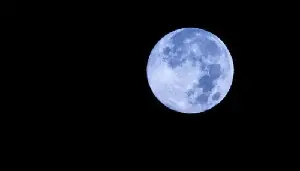
Look Up! Blue Moon to Illuminate This Week's Sky Across U.S.
Light takes about 8 minutes to travel from the sun to the Earth, but the energy carried in that sunlight was generated in the sun’s core tens to hundreds of thousands of years ago — bouncing through the sun’s interior for that entire time before finally escaping its surface and making the 8-minute trip across space
The Surprising Science Behind Moon-Driven Tides And Their Impact On Earth’s Oceans
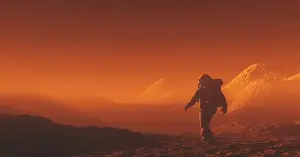
Five uncrewed Starship rockets are projected to launch toward Mars during the brief window in late 2026 when the two planets align for the closest possible journey — and depending on whether they arrive intact, the first crewed missions could follow within five to seven years, in what would be the first time human beings have traveled to another planet in the roughly 200,000-year history of our species
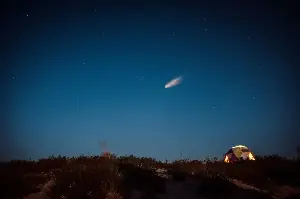
The oldest solid material ever found on Earth didn’t come from Earth at all — it was locked inside a meteorite that landed near Murchison, Victoria in 1969, and the stardust grains inside formed roughly 7 billion years ago, before the Sun existed.
Discover The Most Comforting Dishes Every Cancer Zodiac Will Instantly Fall In Love With

From Ripples To Giants: The Fascinating Physics Behind Ocean Waves And Their Energy Journey

The Fascinating Origins Behind Cancer’s Zodiac Symbol And Its Deep Mythological Meaning

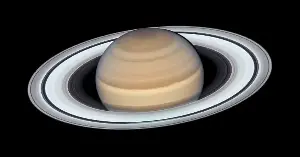
Saturn is the only planet in the solar system that is, on average, less dense than water, so in a big enough bathtub it would float
Discover The True Soulmates Of Cancer: Which Zodiac Signs Are Destined For Perfect Love

Understanding Gravity: Discover the Invisible Force That Shapes Our Entire World and the Whole Universe

Deep inside the planet Neptune, the pressure is so extreme that carbon atoms are crushed into actual diamonds — which then rain downward in solid showers through the planet’s interior — and recent laboratory experiments have successfully recreated the conditions in which this happens, producing tiny synthetic diamonds in the process.

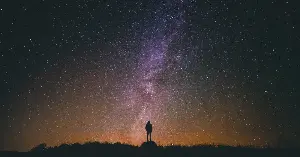
The Sun is not standing still. It is carrying the entire Solar System around the centre of the Milky Way, and one lap takes roughly 230 million years. The last time we were this far around the galaxy, Earth was in the Triassic Period and the very first dinosaurs were only just beginning to walk.
The James Webb Space Telescope has found galaxies that appear to have formed within 280 million years of the Big Bang, some containing heavy elements that shouldn’t have had time to form — and at least one peer-reviewed paper has now proposed that the universe might actually be 26.7 billion years old, almost twice the standard estimate
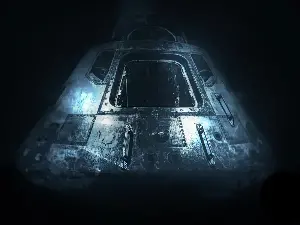
In April 1970, the crew of Apollo 13 navigated home by holding the spacecraft against the terminator of the Earth, the line where day met night on the planet they were trying to reach, timing a fourteen-second engine burn with a wristwatch because their guidance computer had been shut down to save battery power for reentry
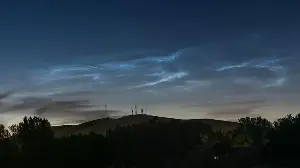
One of the sky's rarest phenomena is back: How to see rare night-shining clouds this summer
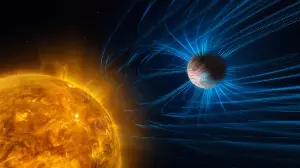
First detection of magnetic fields on exoplanets.
In 1979, Voyager 1 flew past Jupiter and photographed an active volcano erupting on Io, the first time volcanic activity had ever been observed on a world other than Earth, spotted by a navigation engineer checking the probe’s position